
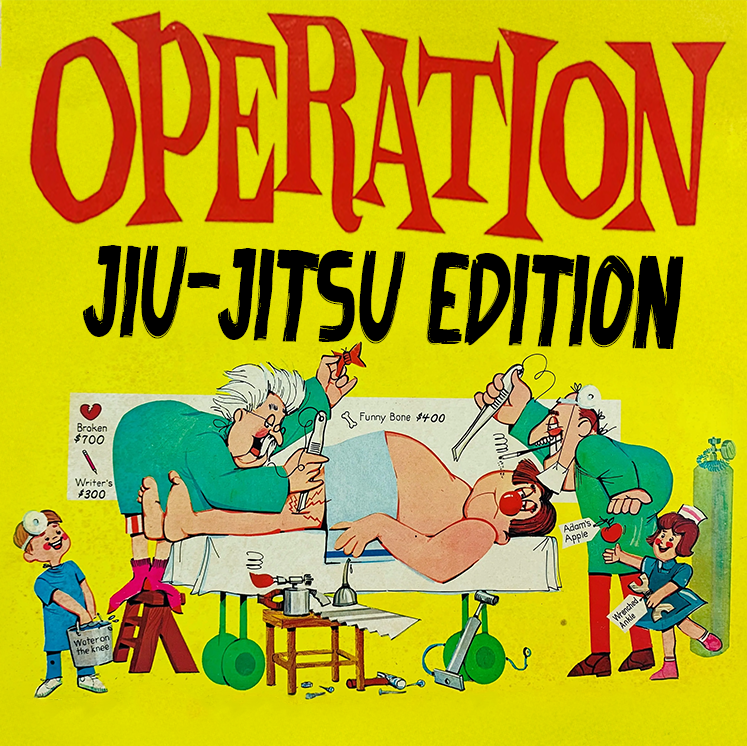
In the first part of this series, Health Considerations in Jiu-Jitsu Part 1: The Risks, we identified why mitigating the risk of injury and illness is so important for coaches and students, but what measures can we take as a team to manage risk?
While jiu-jitsu is a martial art, make no mistake, it is also a contact and combat sport. As such, no amount of words, research, or caution can prevent accidental and oftentimes inexplicable injuries and illnesses due to the inherent level of physicality. That said, by acknowledging the risks, causes, and consequences, coaches and students can employ a team-focused risk mitigation strategy that simultaneously protects and benefits everyone on the team.
Consider these suggestions:
- During drills and rolls, initially focus on technical perfection, not speed. Students should drill techniques with a focus on learning. Drill the technique slowly to ensure it is performed correctly, because nobody is impressed with how fast someone can make mistakes. Students must communicate with their partners if the technique is being applied incorrectly or too aggressively. Students should allow their partners sufficient time to “tap” during submissions by applying the technique in a controlled manner and finishing it slowly. Students should tap once the technique is applied correctly, but before feeling pain. As the technique becomes more fluid, students may gradually increase the speed and intensity at which it is performed.
- Roll at an appropriate speed and intensity commensurate with capabilities. Sparring with aggression and intensity will not turn a two-stripe white belt into Marcelo Garcia, but it will significantly increase the likelihood of injury for both students. During rolls, students should maintain composure, focusing on applying techniques properly against a resisting partner. Rolling harder than a student’s skill set allows is known as “spazzing” and often leads to injury because the body is being forced to execute physical feats for which it is unprepared and perhaps incapable. This often leads to flailing, out-of-control body parts, resulting in painful consequences for one or both students.
- Be considerate of age and sex. Older students, who we’ll define as 40 years old and over, are not brittle and weak; however, science is undeniable. As humans age, they become less durable; minor tweaks become nagging injuries, nagging injuries become debilitating injuries, and debilitating injuries take far longer to heal for older students. Additionally, female students have less bone mass, making their frames naturally less durable; a problem also prevalent in older male grapplers. Rolling with a more “at risk” population does not require concessions or handicaps; however, it is good practice and a general courtesy to match their energy and allow them to dictate the intensity of the round.
- Practice impeccable personal hygiene. Coaches and students must be stewards of hygiene and demand that anyone who trains at their gym share their commitment equally. Students should arrive at class clean, with no offensive odors, and with toenails and fingernails trimmed. Students should wear torso coverings (shirts, rash guards, etc.), both while training in gi and no-gi, to reduce the spread of germs. Any open wound should be completely covered in such a way that it will not be exposed during the training session and, if the wound cannot be covered effectively, the student should not train. Everyone who had body-to-body contact during the training session should wash their hands immediately after class and shower at the earliest opportunity (For Athletes, 2019). Lastly, students and coaches must ensure the mats are properly cleaned after every class and regularly sanitized.
- Do laundry. Everyone must wear freshly cleaned training attire to prevent the spread of germs and offensive odors. Wash your training gear immediately after class. Since gis are air-dried, there may be some disinfectant benefits lost due to the heat of the dryer (Patel et al., 2006). In this case, an Environmental Protection Agency (EPA) certified laundry disinfectant effective against staphylococcus is recommended (Cleaning and Disinfection, 2019). Lysol, Clorox, and OdoBan are just a few companies offering EPA-registered, bleach-free laundry sanitizers.
- Support those who are returning from injury. Studies show that athletes returning from injury require strong social support from coaches and teammates. Coaches should encourage their students to return, but they must also remind them that they are physically injured and have limitations, known as “reality confirmation,” which is a crucial aspect of the rehabilitation and recovery process. Despite a student’s limitations and possible absence from the mats, coaches should not ignore them. In fact, given the negativity the student may already feel regarding the injury, the coach should ensure the student feels relevant, missed, and cared for while also preparing the student for their eventual return to training (Robbins, 2012). Not only is this care and concern good for students, it is also good for student retention, loyalty, and churn reduction.
- Be mindful of malicious intent. For the overwhelming majority of students, jiu-jitsu is a safe and enjoyable hobby, but occasionally there are “bad apples.” Some have witnessed situations where one practitioner threatens harm, attempts harm, or intentionally harms another practitioner in class. Any purposeful act that causes serious bodily injury is a crime in all states and is likely a felony in most jurisdictions. This is shameful behavior, and any jiu-jitsu practitioner who learns of another student’s nefarious intent to cause physical injury, or witnesses purposeful physical injury, has a moral obligation to report it to the coach.
- Be deliberate. Mitigating the risk of injury and illness using these suggestions is a team effort and should be a shared priority among coaches and students. In other words, student safety should be the culture. Coaches should frequently encourage and remind their students to actively assess and address injury and illness concerns, while students should work collectively to protect each other. To ensure injury and illness prevention is part of the gym culture, consider creating a written covenant modeled after the Hippocratic Oath: “primum non nocere,” or “first, do no harm.”
Summary
As jiu-jitsu practitioners, we do not fear injury; however, we must collectively, intentionally, and incessantly focus on mitigating the associated health risks. Since teams are comprised of individuals, every student must understand their responsibilities as well. Stay tuned for the third part of this series, where we will share tips on individual responsibilities to help minimize illness and injury.
References
Cleaning and Disinfection. Centers for Disease Control and Prevention (2019). https://www.cdc.gov/mrsa/community/environment/laundry.html
For Athletes. Centers for Disease Control and Prevention (2019). https://www.cdc.gov/mrsa/community/team-hc-providers/advice-for-athletes.html
Patel, S. N., Murray-Leonard, J., & Wilson, A. P. R. (2006). Laundering of Hospital Staff Uniforms at Home. Journal of Hospital Infection, 62(1), 89–93. https://doi.org/10.1016/j.jhin.2005.06.002
Robbins, J. (2012). Understanding the Psychology of Injured Athletes and Returning to Play. Podiatry Today.
DISCLAIMER: THIS WEBSITE DOES NOT PROVIDE MEDICAL ADVICE
The information, including but not limited to text, graphics, images, and other material contained on this website, is for informational purposes only. No material on this site is intended to be a substitute for professional medical advice, diagnosis, or treatment. Always seek the advice of your physician or other qualified healthcare provider with any questions you may have regarding a medical condition or treatment, and before undertaking any new physical activity, and never disregard professional medical advice or delay in seeking it because of something you have read on this website.
About The Author
Brian Bowers is a Brazilian Jiu-Jitsu black belt under Professor Chris Popdan with nearly two decades of experience and the Lead instructor of the FLEOA 111 Project. Read More….
Discover more from
The FLEOA 111 Project
Subscribe to our free newsletter to be notified of new articles, events, literature reviews, and other information related to our mission. You do not need to be a member of FLEOA to participate in the FLEOA 111 Project.
Follow The FLEOA 111 Project on social media


You must be logged in to post a comment.