
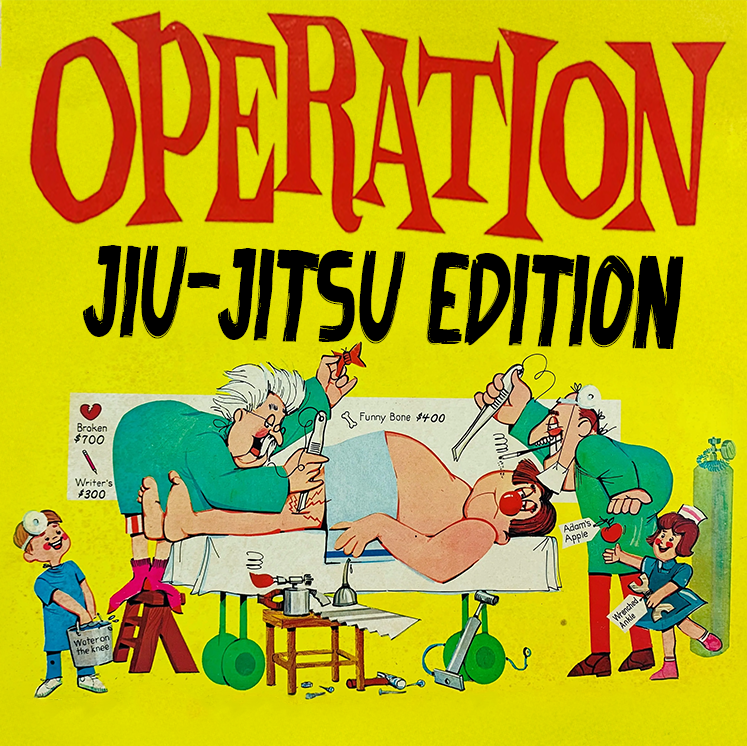
The safety and health of jiu-jitsu practitioners should be a shared priority among all students and coaches for good reason: grappling poses an inherent risk of injury and training-related illness.
Many studies show that athletes in combat sports and martial arts are predisposed to injury. One study found nearly 70% of jiu-jitsu students suffered an injury in only a three-year timeframe, resulting in at least a two-week absence from training (Hinz et al., 2021). A study of martial arts-related injuries found that 95% of all participants suffered an injury, predominantly strains and sprains, and injuries to the lower extremities. Injuries to the knees were most common. The study also identified that males over the age of 35 were at greater risk of injury requiring hospitalization (Bickley et al., 2023). A 2017 study of collegiate wrestling, another close-contact sport, reported that the most frequently injured area was the skin. Interestingly, these types of injuries also resulted in the most missed training time by a considerable margin (Otero et al., 2017).
On one hand, coaches and gym owners could shrug this data off and accept injury and illness as a natural consequence of training, but dismissing evidence for convenience is shortsighted. Injuries can have a catastrophic impact on students, coaches, and gym owners due to various unfortunate consequences that are often overlooked.
- Many students have physical careers or physical standards that must be met as a condition of employment. An injury or illness could cause them to miss work or fail to meet a conditional employment standard. This is especially important for self-employed students or those in public safety, which could result in fewer police officers patrolling communities or fewer available firefighters.
- Many students are actively training for competition. An injury or illness could negatively affect their performance, or even force the competitor to withdraw completely.
- While students can often train despite minor injuries and pain, injured and ill students will miss time, which is not only a loss for the student but also for their training partners. In the case of skin infections, such as staph, the uncontrolled spread could be devastating.
- Some students may participate in scholastic athletics or other competitive sports. An injury could disrupt their academic performance and compromise their athletic abilities.
- Medical treatment for injuries and some illnesses are often expensive, and not all students have the financial means to incur these costs, which is even more concerning if the student must also miss time from work without pay.
- Injuries and illness can hamper participation in other hobbies, many of which are family-oriented or therapeutic. For example, imagine a writer or musician with a wrist injury, an avid hiker with an ankle injury, or a powerlifter with a shoulder injury.
- From a business perspective, injured students often impact client retention. Chris Cooper, the founder of Two-Brain Business, a mentoring company for gym entrepreneurs, states, “The science of keeping [clients] around can really be measured two different ways: Retention – The span of time between a client’s first visit and their last; Adherence – the frequency of a client’s visits” (Cooper, 2016). Students unable to train due to injury may allow their membership to lapse, reducing the most critical source of revenue for the gym owner. This problem is compounded by time because, while many students return to training as soon as medically cleared, some never return at all.
- What about an injury to a coach? Again, from a business perspective, the gym owner has to answer several questions: Who covers the classes formerly taught by the injured coach? Will the interim coach be paid? What happens to the interim coach when the injured coach is ready to resume teaching duties? What if there is no interim coach for a specific class? Are classes canceled indefinitely? Will the students seek training elsewhere?
- Should a gym owner or instructor be found negligent, the legal ramifications could be catastrophic. In 2020, a jiu-jitsu student filed a lawsuit in San Diego after he became paralyzed during an open mat session. In 2023, the jury awarded the plaintiff $46,475,112 after determining that the defendants were negligent (Greener vs Iturralde, 2023). In legal matters, sometimes the process is the punishment because any lawsuit, be it frivolous or factual, will be costly. Worse yet, if a judge or jury (who are likely unfamiliar with jiu-jitsu) finds the gym or coach acted with gross negligence, a liability waiver will be of little protection.
- There is nothing more somber and humbling than witnessing or, worse yet, being the root cause of a training partner’s injury. Even for the most seasoned, well-mannered practitioner, causing a severe injury will leave one feeling tremendous remorse.
In the words of John Danaher, “Injuries are inevitable” (2020). As jiu-jitsu practitioners, we accept the risk of injury and, while we must not fear injuries, we must work collectively to mitigate the risks. The second part of this series will provide easy, science-based strategies to minimize the risk of injury and illness.
References
Bickley, R. J., Hazim, N. Y., Sy, J. W., & Nute, D. W. (2023). An epidemiological study of martial arts injuries in patients presenting to US emergency rooms. Injury, 54(12), 111089. https://doi.org/10.1016/j.injury.2023.111089
Cooper, C. (2016). Retention and adherence. Two-Brain Business.
Danaher, J. (2020). Train Safe: Reducing the Risk of Injury & Accidents in the Jiu Jitsu Training Room [Video]. BJJ Fanatics.
Greener vs Iturralde, 37-2020-00041382 (San Diego Superior Court March 28, 2023).
Hinz, M., Kleim, B. D., Berthold, D. P., Geyer, S., Lambert, C., Imhoff, A. B., & Mehl, J. (2021). Injury patterns, risk factors, and return to sport in brazilian jiu jitsu: A cross-sectional survey of 1140 athletes. Orthopaedic Journal of Sports Medicine, 9(12), 232596712110625. https://doi.org/10.1177/23259671211062568
Otero, J. E., Graves, C. M., & Bollier, M. J. (2017). Injuries in Collegiate Wrestlers at an Elite Division I NCAA Wrestling Program: An Epidemiological Study. The Iowa orthopaedic journal, 37, 65–70.
DISCLAIMER: THIS WEBSITE DOES NOT PROVIDE MEDICAL ADVICE
The information, including but not limited to text, graphics, images, and other material contained on this website, is for informational purposes only. No material on this site is intended to be a substitute for professional medical advice, diagnosis, or treatment. Always seek the advice of your physician or other qualified healthcare provider with any questions you may have regarding a medical condition or treatment, and before undertaking any new physical activity, and never disregard professional medical advice or delay in seeking it because of something you have read on this website.
About The Author
Brian Bowers is a Brazilian Jiu-Jitsu black belt under Professor Chris Popdan with nearly two decades of experience and the Lead instructor of the FLEOA 111 Project. Read More….
Discover more from
The FLEOA 111 Project
Subscribe to our free newsletter to be notified of new articles, events, literature reviews, and other information related to our mission. You do not need to be a member of FLEOA to participate in the FLEOA 111 Project.
Follow The FLEOA 111 Project on social media


You must be logged in to post a comment.