

Based on survey results, “wellness” was one of the most hated buzzwords in 2024 (Hutchinson, 2024). Why? Although wellness is an incredibly important concept, it is often just a bunch of emails with no tangible intent that rarely result in any impactful, long-lasting action or activity. Well, many already know there is an obvious solution:
Jiu-Jitsu
Generally speaking, wellness encompasses eight dimensions: physical, social, financial, spiritual, occupational, emotional, intellectual, and environmental (Swarbrick, 2023). Studies and anecdotal evidence conclusively demonstrate that jiu-jitsu students benefit in several of these areas (Minoso, 2024).
Physical
Jiu-jitsu is a martial art and physical combat sport that improves total body strength, mobility, coordination, and overall body awareness. Therefore, it is self-evident that jiu-jitsu provides tremendous positive physical benefits such as weight loss, body recomposition, and total body strength. To what extent? Unfortunately, it is impossible to know exactly because many factors influence energy expenditure, or the metabolic equivalent of task (MET), such as the practitioner’s experience, the aggressiveness of their opponent, the intensity of the sparring sessions, weight, and body composition, to name a few. Popular fitness trackers and activity monitors indicate jiu-jitsu burns nearly the same calories as vigorous, fast-paced lap swimming. Like swimming, jiu-jitsu is a total body activity requiring muscles to work against resistance and, as such, is an efficient and effective means of exercise.
Studies suggest that, regardless of experience, jiu-jitsu athletes have a relatively low body fat percentage (Coswig et al., 2011) and, depending on the age of the practitioner, a VO2 Max range between 42 and 52 mL/kg/min, which is above-average to excellent (Andreato et al., 2017). As practitioners gain experience, researchers found continued strength and power development in the lower body and hands (Diaz-Lara et al., 2014), as well as greater upper limb endurance and flexibility (Coswig et al., 2011).
Spiritual
While spiritual wellness is often associated with religious activities, in a wellness context, it more broadly refers to living with purpose, calmness, comfort, and ethical values (Stride Mental Health Charity, 2024).
Jiu-jitsu practitioners develop resilience, patience, and an enhanced ability to remain calm while making decisions under significant physical, mental, and emotional pressure. Given the alarming prevalence of violent criminal activity, citizens benefit tremendously by learning techniques to defend against violent physical attacks within the parameters of self-defense law, as jiu-jitsu training reduces claims of unreasonable force and reduces injuries to all parties engaged in a self-defense altercation, which is not only legally appropriate, it is also ethical (Browne, 2021; Kay, 2020).
Researchers found a correlation between an enhanced sense of purpose and increased mindfulness among jiu-jitsu practitioners, attributed to the social aspect of the classes, leading experts to conclude that jiu-jitsu is an effective tool for treating post-traumatic stress disorder among veterans (Weinberger & Burraston, 2021). Earlier studies suggested jiu-jitsu decreased symptoms of PTSD, such as depression, generalized anxiety, and alcohol use (Willing et al., 2019).
Social
Since a jiu-jitsu class is a group learning activity that requires a partner for practice, the social interactions during training enhance students’ interpersonal skills. The rigorous physical activity promotes team building, solidarity, mutual respect, strong friendships, a sense of belonging, and trust, especially given the close physical contact during training.
A group of veterans diagnosed with PTSD reported that jiu-jitsu classes “mimicked the brotherhood that is traditionally found within the military” and that the “camaraderie, support, and accountability to the group motivated participants to attend regular classes and venture further out into society” (Weinberger & Burraston, 2021). Most jiu-jitsu practitioners agree that these feelings are common among all students, regardless of their background, culture, or occupation, because jiu-jitsu is an individual activity performed with a partner in a team-oriented environment.
Emotional
During a typical jiu-jitsu class, students find it difficult to be distracted, as class activities consume their attention. Most classes include a technique lesson along with live sparring, or “rolling,” which requires a student’s complete concentration and mental focus. In other words, it is difficult to think about anything other than jiu-jitsu, especially when rolling.
Researchers suggest that jiu-jitsu students of all experience levels and ages exhibit greater respect for others, perseverance, self-confidence, and healthy habits, all of which are directly related to jiu-jitsu training (Chinkov & Holt, 2015).
A longitudinal study of 145 jiu-jitsu and mixed martial arts students discovered that jiu-jitsu practitioners enjoyed increased self-control, empathy, altruism, and decreased aggression (Mickelsson, 2019). A decrease in aggression is not surprising given that jiu-jitsu teaches self-control. Other researchers found that jiu-jitsu training decreases hostility and verbal aggression in both men and women (Wojdat & Ossowski, 2019).
As previously noted, multiple studies found that jiu-jitsu practitioners demonstrated decreased depression, anxiety, and aggression while enjoying a greater sense of confidence, mental strength, resilience, grit, empowerment, and discipline (de Lorenco-Lima et al., 2025; Weinberger & Burraston, 2021; Willing et al., 2019).
According to the National Institute of Mental Health, 58.7 million American adults are affected by mental illness (2023). While jiu-jitsu may not replace clinical treatment for those affected, it shows promising results as a natural and therapeutic intervention.
Occupational
For professions that involve physical combat or restraint, such as law enforcement, corrections, paramedics, security, medical staff, and the military, jiu-jitsu is a beneficial skill that has a direct and obvious application in enhancing occupational wellness. In short, physical dominance achieved through the application of efficient and effective techniques results in increased survivability and fewer injuries to all parties involved (Browne, 2021; Kay, 2020).
What about students employed in non-physical occupations? Jiu-jitsu is an excellent hobby that helps maintain a healthy work-life balance, and it reinforces the importance of discipline, relationship building, and pursuing goals. For those who are unemployed or retired, jiu-jitsu offers networking opportunities, social interactions, and a sense of purpose that can be overlooked outside of professional settings.
Science suggests that as jiu-jitsu practitioners gain experience, they are generally more likely to present greater mental strength, resilience, grit, confidence, self-control, life satisfaction, and better mental health – all attributes heavily favored by reputable employers (de Lorenco-Lima et al., 2025).
Researchers also find that jiu-jitsu training enhances leadership skills. Studies suggest practitioners develop emotional stability, self-control, stress management, communication skills, and decision-making abilities under immense pressure. Research also suggests that regular practice helps practitioners learn to manage their emotional states and analyze the emotional states of their partners (Cowan, 2024).
Intellectual
The techniques to escape compromising positions, maintain dominant positions, and submit an opponent require a functional comprehension of physics, biology, and anatomy. After a few years of regular training, most jiu-jitsu practitioners have a solid understanding of leverage, momentum, joint structure, arterial and airway occlusion, and force transfer (Langley, 2025).
Jiu-jitsu also requires strategic thinking. Many practitioners believe rolling is like playing chess with their body. Like chess, jiu-jitsu requires time and effort to learn not only the skills but also the etiquette, and it demands strategic thinking and problem-solving to gain advantages and win (Erard, 2018). Perhaps most importantly, like chess, jiu-jitsu practitioners learn from defeat.
Studies also show the physical component of jiu-jitsu increases intelligence, as well. Arduous physical activity releases brain-derived neurotrophic factor (BDNF). This protein is responsible for the “runner’s high” and other exercise-induced euphoria that provides energy, focus, and “good vibes” after a hard workout (Ley, 2014). BDNF also promotes the growth and survival of neurons, which enhances brain function, cognitive health, memory formation, and learning (Nicastri et al., 2022).
Financial
Jiu-jitsu classes can be expensive; however, classes are relatively cheap when viewed as an investment. In two studies, spanning over 70 gyms and more than 20 states, the average monthly fee in 2024 was around $150 (Gallo, 2024; Mann, 2024). Most gyms offer classes nearly every day of the week and at multiple times throughout each day. Some gyms offer complimentary access to strength and conditioning equipment, as well as classes such as boxing, yoga, CrossFit, and other martial arts. CrossFit and boot camps, the only suitable comparison for a rigorous, group-based workout, cost a similar amount (if not more) but lack many of the wellness benefits of jiu-jitsu training. In terms of value, jiu-jitsu offers a lot of “bang for your buck.”
Summary
Ask any jiu-jitsu practitioner who has trained for six months or longer. They will emphatically agree that jiu-jitsu students enjoy many wellness benefits. For anyone seeking a little more wellness in their life, a nearby jiu-jitsu class is offering free trial classes with coaches ready to meet their wellness needs.
References
Andreato, L. V., Lara, F. J. D., Andrade, A., & Branco, B. H. M. (2017). Physical and physiological profiles of brazilian jiu-jitsu athletes: a systematic review. Sports Medicine – Open,3(1).
Browne, B. (2021). How police can add jiu-jitsu to use of force training. Police1.
Chinkov, A. E., & Holt, N. L. (2015). Implicit transfer of life skills through participation in Brazilian Jiu-Jitsu. Journal of Applied Sport Psychology, 28(2), 139–153.
Collura, G. L. (2018). Brazilian Jiu Jitsu: A tool for veteran reassimilation. University of South Florida.
Coswig, V. S., Hipólito, A., & Vecchio, D. (2011). Características físicas e desempenho motor no jiu-jitsu brasileiro: estudo com iniciantes e experientes na modalidade. EFDeportes.com, 16(162), 1.
Cowan, S. (2024). Teaching beyond technique: the educational benefits of Brazilian jiu-jitsu in building emotional intelligence and leadership skills. The American Journal of Applied Sciences, vol. 6, no. 12, 1 Dec. 2024, pp. 28–34.
de Lorenco-Lima, L., et al. (2025). Rank-based psychological characteristics in Brazilian jiu-jitsu athletes: mental strength, resilience, grit, self-efficacy, self-control, aggression, life satisfaction, and mental health. Journal of Functional Morphology and Kinesiology, vol. 10, no. 2, 22 Mar. 2025, p. 100.
Diaz-Lara, F. J., García, M., Monteiro, L. F., & Abian-Vicen, J. (2014). Body composition, isometric hand grip and explosive strength leg – similarities and differences between novices and experts in an international competition of Brazilian jiu jitsu. Archives of Budo, 10, 211–217.
Erard, T. (2018). Five Ways BJJ is Human Chess. Kraken BJJ.
Fender, R. (2024). Benefits of Brazilian jiu-jitsu for soldier rehabilitation. U.S. Army.
Fields, C. (2019). Brazilian Jiu-Jitsu helps injured Soldiers adapt to their new normal. U.S. Army.
Gallo, N. (2024). How Much Are BJJ Classes? Grapple Tactics.
Hutchinson, K. (2024, December 23). The 21 most Annoying Business Buzzwords of 2024. TrustRadius for Vendors.
Kay, A. (2020). Invictus Leo Jiu Jitsu Collective: How Jiu Jitsu is Saving Lives in Law Enforcement- A Research Paper. Invictus Leo Jiu Jitsu Collective.
Kilby, T. (2022). The benefits of jiu-jitsu beyond technique. Police1.
Langley, S. (2025). The science of jiu jitsu. The Jiu Jitsu Brotherhood.
Ley, D. (2014). Why has BJJ become so popular, and why does it inspire such dedication? Psychology Today.
Mann, A. (2024). How Much Are Jiu Jitsu Classes? Jiu Jitsu Thoughts.
Mickelsson, T. B. (2021). Brazilian jiu-jitsu as social and psychological therapy: a systematic review. Journal of Physical Education and Sport, 21(3).
Mickelsson, T. B. (2019). Modern unexplored martial arts – what can mixed martial arts and Brazilian Jiu‐Jitsu do for youth development? European Journal of Sport Science, 20(3), 386–393.
Minoso, G. (2024). An examination of studies related to Brazilian jiu-jitsu in enhancing mental and physical health among veterans and first responders: A scoping review. The Sport Journal.
National Institute of Mental Health. (2023). Mental illness. National Institute of Mental Health.
Nicastri, C. M., McFeeley, B. M., Simon, S. S., Ledreux, A., Håkansson, K., Granholm, A., Mohammed, A. H., & Daffner, K. R. (2022). BDNF mediates improvement in cognitive performance after computerized cognitive training in healthy older adults. Alzheimers & Dementia Translational Research & Clinical Interventions, 8(1).
Stride Mental Health Charity. (2024). Spiritual wellness: what is spiritual wellbeing? Stride.
Swarbrick, M. (2023). The evolution of the Wellness Model. Freehold, NJ: Collaborative Support Programs of New Jersey, Inc.
Weinberger, K., & Burraston, T. (2021). Benefits of Brazilian Jiu-Jitsu in Managing Post-Traumatic Stress Disorder: a Longitudinal study. Journal of Community Engagement and Scholarship, 13(4).
Willing, A. E., Girling, S. A., Deichert, R., Wood-Deichert, R., Gonzalez, J., Hernandez, D., Foran, E., Sanberg, P. R., & Kip, K. E. (2019). Brazilian Jiu Jitsu Training for US Service Members and Veterans with Symptoms of PTSD. Military Medicine, 184(11–12), e626–e631.
Wojdat, M., & Ossowski, R. (2019). Comparative analysis of the level’s aggression of women and men training Brazilian Jiu – Jitsu in the light of the possibilities for therapeutic purposes. DOAJ (DOAJ: Directory of Open Access Journals).
About The Author
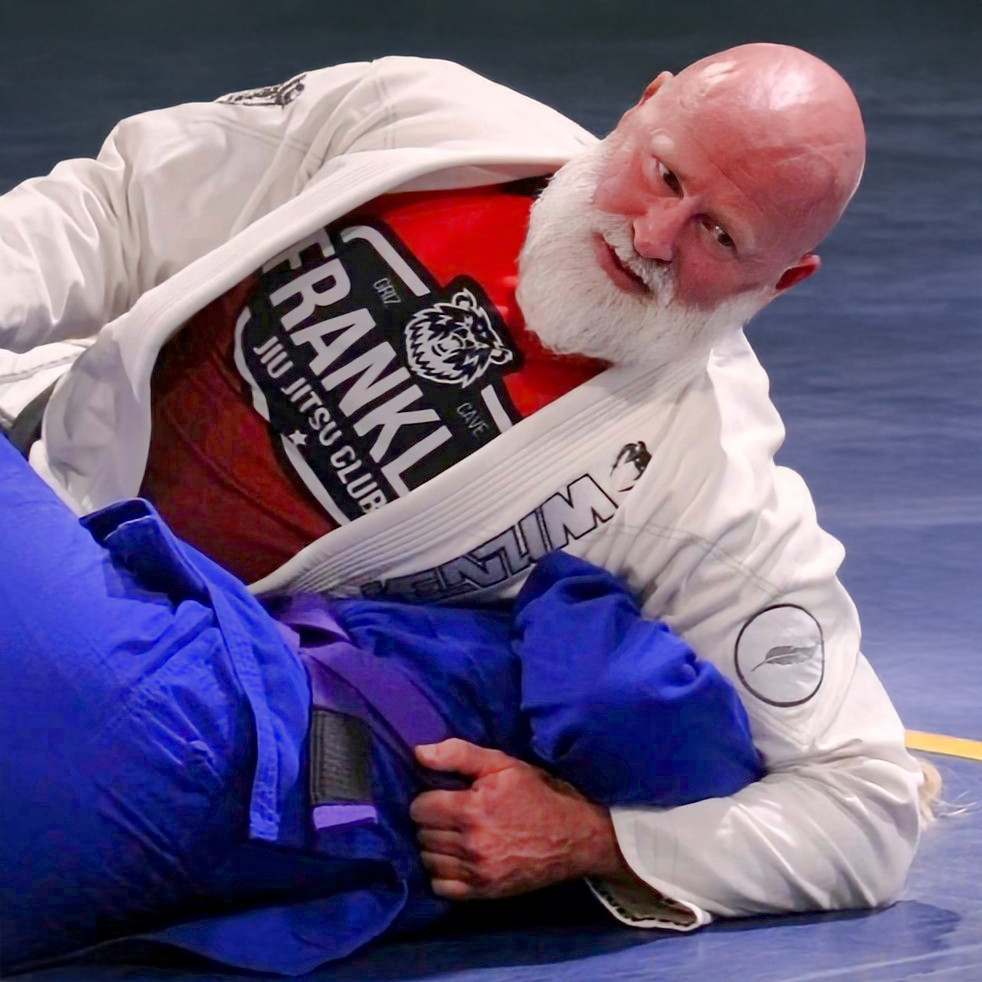
Brian Bowers is a Brazilian Jiu-Jitsu black belt under Professor Chris Popdan with nearly two decades of experience and the Lead instructor of the FLEOA 111 Project. Read More….
Discover more from
The FLEOA 111 Project
Subscribe to our free newsletter to be notified of new articles, events, literature reviews, and other information related to our mission. You do not need to be a member of FLEOA to participate in the FLEOA 111 Project.
Follow The FLEOA 111 Project on social media


You must be logged in to post a comment.